The Dunce Cap
The dunce cap has a surprising long history dating back way further than most would guess. It started with catholic priest named John Duns Scotus in the 13th century. He was well respected during his time for his complex theories and philosophies, he actually taught at the University of Paris until he was kicked out because sided with the pope when the pope was in dispute with the King of France (although he was later allowed to return). He was even beatified (meaning he was recognized to have lived a holy life) by Pope John Paul II in 93. One of his theories was that by wearing a cone shaped hat, knowledge could be absorbed at it’s tip and funneled into his head at the base of the hat. Despite how ridiculous this may sound today, he had many followers that also donned the conical headwear.
Now, Duns’ theories were later written off with changing views of the church and the public during the Reinassance. He still had followers at the time and they were mocked for clinging to outdated beliefs. By that time, the Duns’ hat was iconic among his followers and became known as a symbol of idiocy for the general populace. However, it was not used in classrooms until much later. Before there was a dunce hat, there was a dunce table, as first highlighted in written form by John Ford in his play The Sun’s Darling, in the late 17th century.
The dunce table shifted to the dunce hat which was then used to punish children who acted out in class or were seen as slow (which unfortunately was often attributed to students with neurodivergencies or to students who simply didn’t speak English as their primary language.) The height of its use was in the Victorian era, but it was used in the US well into the 1950s. This wasn’t the end of “dunce” though, as the dunce corner was used up to the 2000s in some areas of England.
Here are my soruces:
https://www.atlasobscura.com/articles/the-dunce-cap-wasnt-always-so-stupid
https://boingboing.net/2021/06/13/the-occult-history-of-the-dunce-cap.html
https://allthatsinteresting.com/dunce-cap
There was actually a lot of conversation with someone close to me about whether I should make a dunce cap myself or not, given its history. My personal take on it is that it is no longer used and as this is a personal project of mine, I’d like to make as many of these hats myself as I can. There is one future hat that I will not make, simply because I don’t want it in my house. However, I don’t think making a dunce cap is wrong as it will be folded up and stored away along with one of my bandanas in a little binder I have for these early projects. This hat will not see the light of day outside of this post. So, with all that said, here it is:
And here’s the video I followed to make it.
My Dunce Cap:
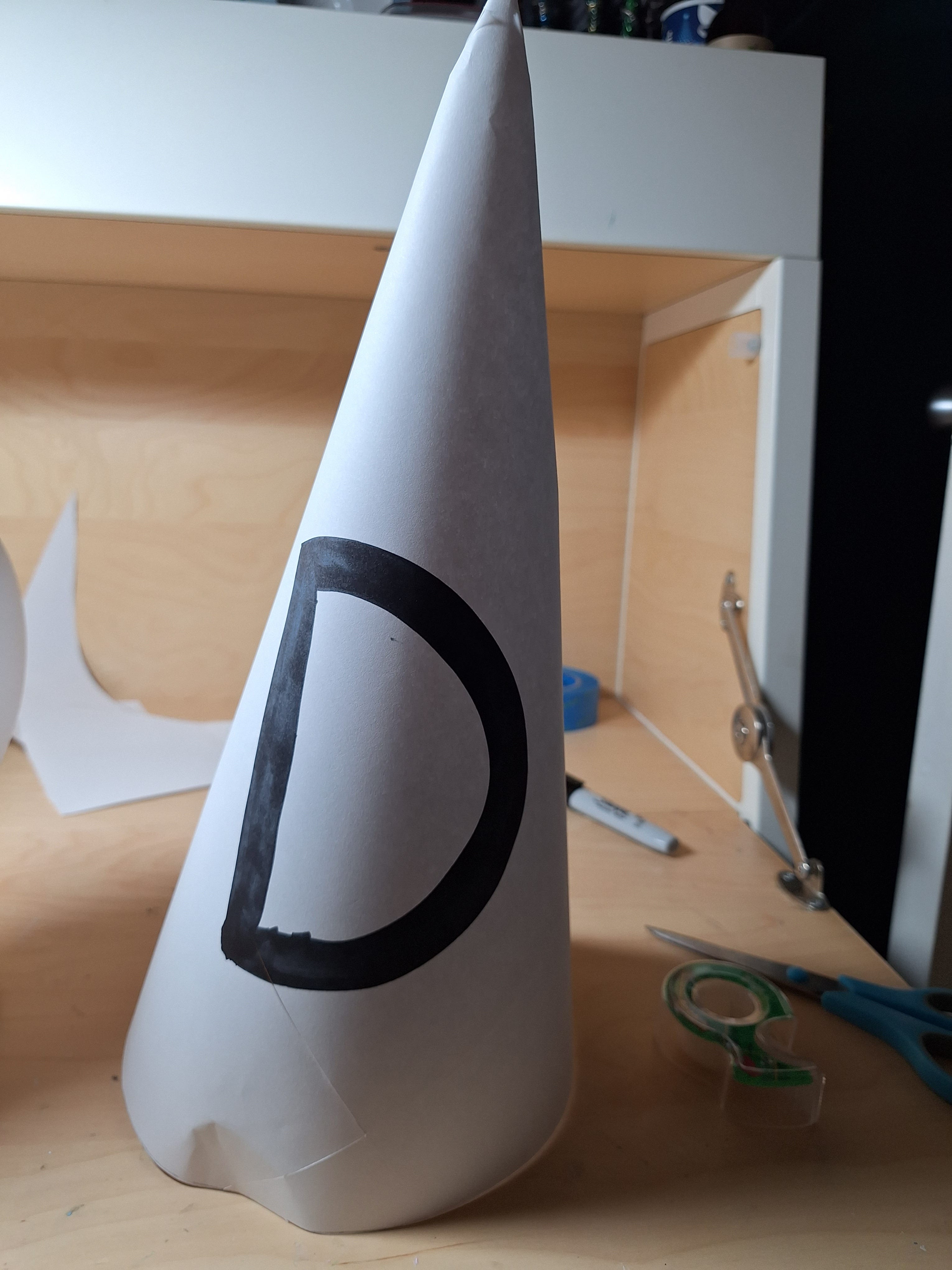
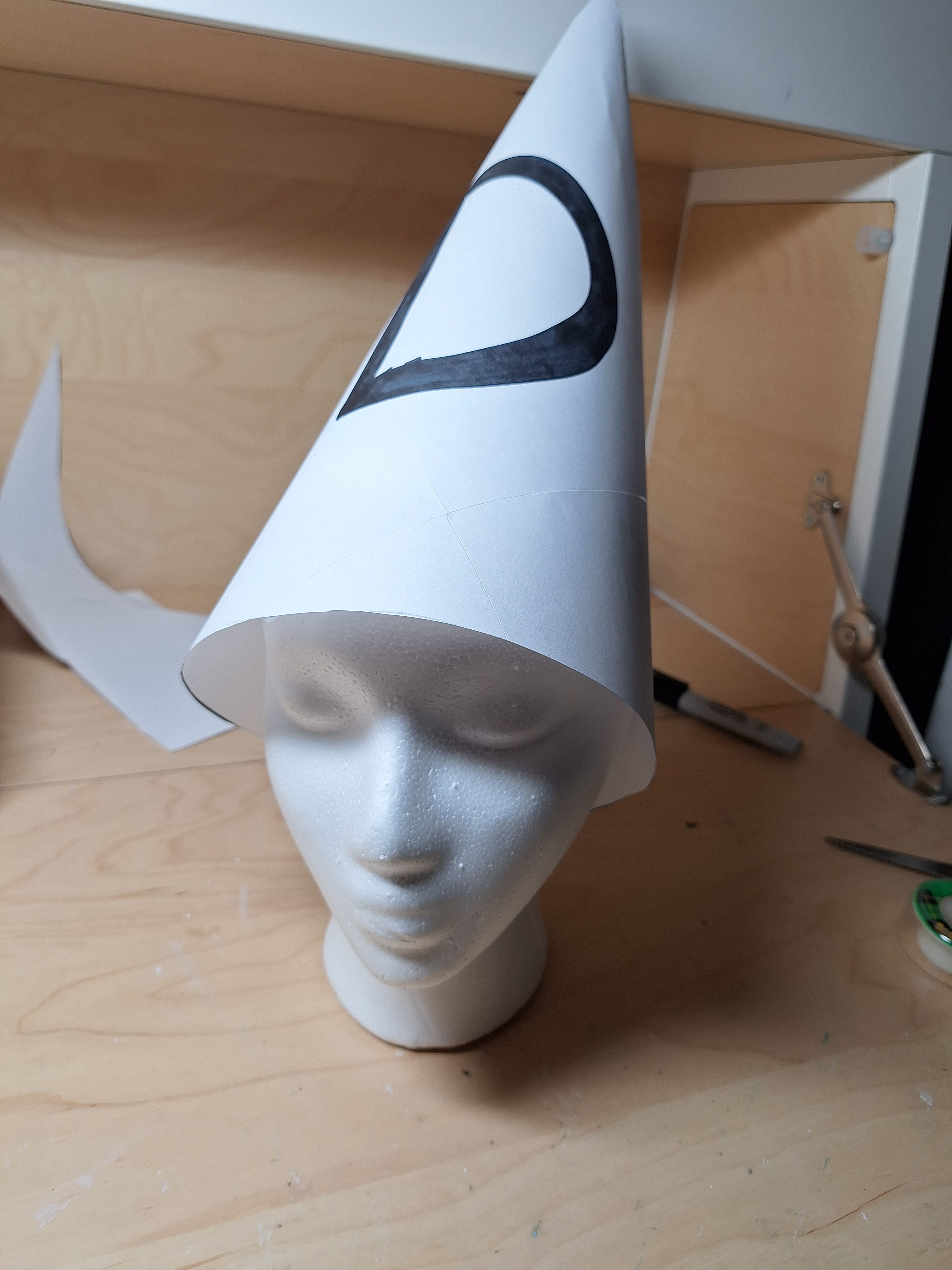
So there it is. I have to be honest, it was more work than I anticipated. It only took me like 15 minutes, but it’s still a lot of steps and effort to humiliate a student. For the time it took to make this, the situation would have passed and depending on the age, the student may well be confused about why they have to where them. I mean, I guess they could have some pre-made ones on standby, but that’s like “Let’s make these instruments of humiliation ahead of time so I don’t have to worry about it in the moment.” As a modern day teacher, it’s just weird. Why the hell would you do this? I get needing to send a kid out of the room. I understand the frustration of dealing with a student who has no capacity to self-regulate their impulses, but why would you do this? There are better avenues that were even available at the time. Take the kids for a walk and/or have them run laps. Gets the excessive energy out. If a student is challenging your authority start a dialogue (although I completely get why some days you just don’t have the band width for this, so it’s just easier to send them out of the room.) If a student isn’t understanding a topic after multiple attempts on your part, pair them with peers or have them explain what they do know. There were so many other options. I just don’t get it.

Comments
Post a Comment